


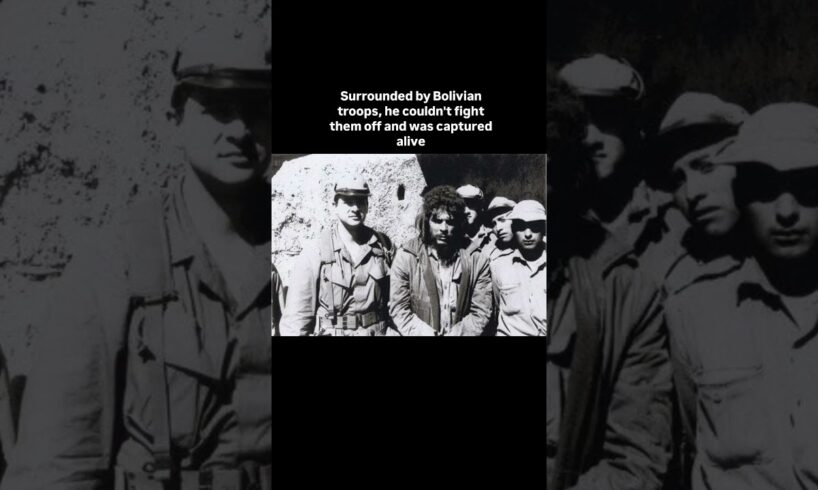
On October 8, 1967, deep in the Bolivian mountains, a small band of weary guerrilla fighters found themselves surrounded. Among them was Ernesto “Che” Guevara, the Argentine revolutionary who had once stood beside Fidel Castro in the Cuban Revolution. His dream of igniting similar uprisings across Latin America had brought him to Bolivia, but by that autumn day, his campaign was collapsing.
For months, Guevara’s group had struggled. Their contact with local peasants failed to gain traction, and Bolivian forces, aided by U.S. military advisers from the CIA, hunted them relentlessly. Food was scarce, and several of his men had been killed or captured. By early October, Bolivian Rangers had closed in on the group’s hiding place in the Yuro ravine near the village of La Higuera. A brief firefight broke out. Guevara’s weapon was damaged, and he was wounded and taken prisoner.
He was captured alive and brought to a small schoolhouse in La Higuera. The Bolivian government, under pressure to avoid turning him into a global martyr, debated what to do. U.S. officials advised interrogation, but Bolivian leaders feared an international spectacle if Guevara were put on trial. The decision was made quickly and secretly: Che Guevara would be executed.
Mario Terán, a Bolivian Sergeant, requested to shoot Guevara because three of his friends from B Company, all with the same first name of “Mario,” had been killed in a firefight several days earlier with Guevara’s band of guerrillas. The execution occurred the next day. Guevara reportedly stood calmly and told his executioner the following: “I know you are here to kill me. Shoot, coward, you are only going to kill a man.” His body was later displayed publicly in Vallegrande as proof of his death before being buried in an unmarked grave.
Three decades later, in 1997, his remains were discovered and returned to Cuba, where he was reinterred in a mausoleum in Santa Clara. Guevara’s legacy remains divisive: to some, he symbolizes rebellion and resistance against oppression; to others, he represents the darker side of revolutionary violence. What is certain is that his image endures far beyond the Bolivian hills where his final struggle ended.
Subscribe for more daily history posts!
#CheGuevara #History #LatinAmerica #Bolivia #Revolution #OnThisDay
source






Era Lui Che entro in England….don't have the car for the dinners
Chi E questo con la barba non c'era Lui in England…era Vero eravamo in England
Come lo chiamavano a questi in Bolivia Che?
El Che Ed eravamo dove?
And now realize that the Deep State CIA Jackal operatives set up the entire rebellion in order to try to overthrow the Cuban government and with the Bay of Pigs was trying to start a War conflict
Hell awaits
Che Guevara is exactly where he belongs They should have flushed his ashes down the toilet
Wake up you lunatics communism does not work
He was a murdering scumbag.
He was piece of shit human being and deserved far worse than what ge got. May his followers today receive swifter exits from the planet.
And Castro the savior of Cuba was just as bad…communists do a bang-up job of destroying economies and freedoms.
How can a commie be a hero?
Just another dead Terrorist.
We love you Comrade Che Guevara
Se quedaba en Argentina y podría haber hecho un montón de cosas buenas, su final fue horrible
Великий воин. Но его предали. Вечная память герою.